

Put AI to Work on Real Inventory Problems
Analyze inventory data, automate complex work, and dynamically respond to changing conditions across your operations. Cloud Inventory gives AI the operational context to do more than just retrieving data.
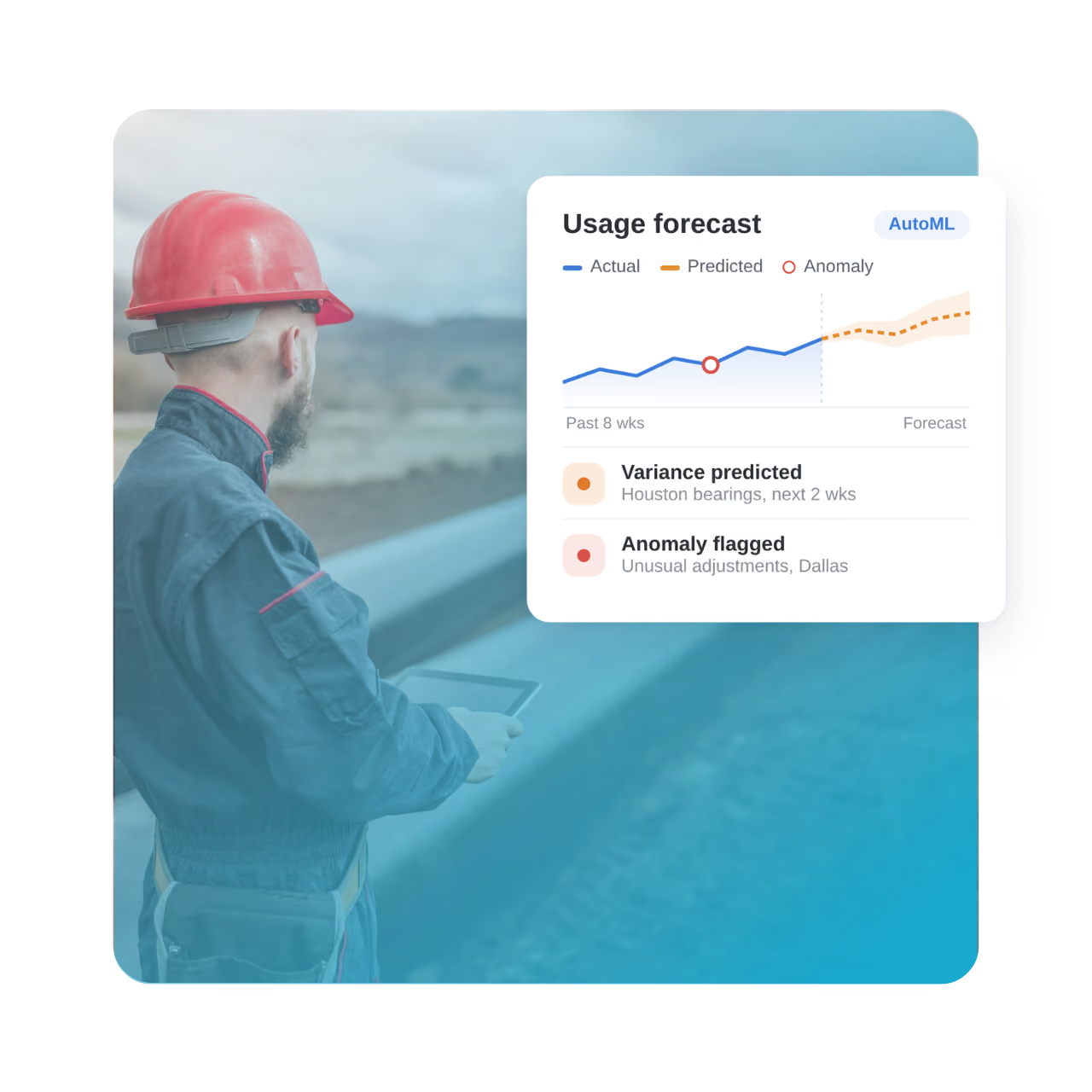
Find Patterns Hidden in Your Inventory Data
Use data analysis and AutoML to uncover insights about your inventory data and make key predictions—from material consumption and inventory variances to potential operational anomalies.
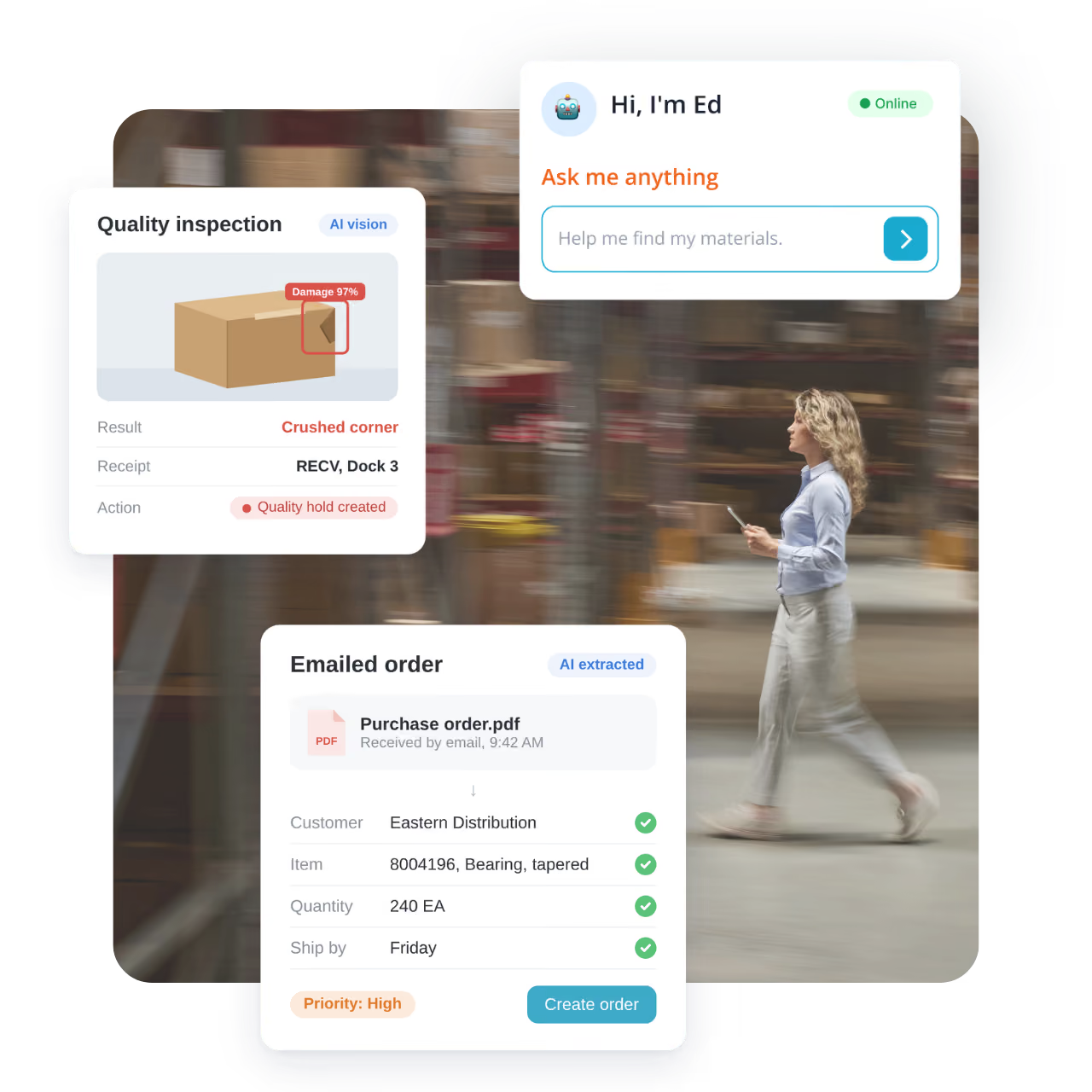
Turn Unstructured Information Into Automated Action
Use AI to interpret documents, images, and other unstructured inputs, and turn them into usable operational data for everyday tasks like processing emailed orders, prioritizing shipments, or capturing quality inspection results.
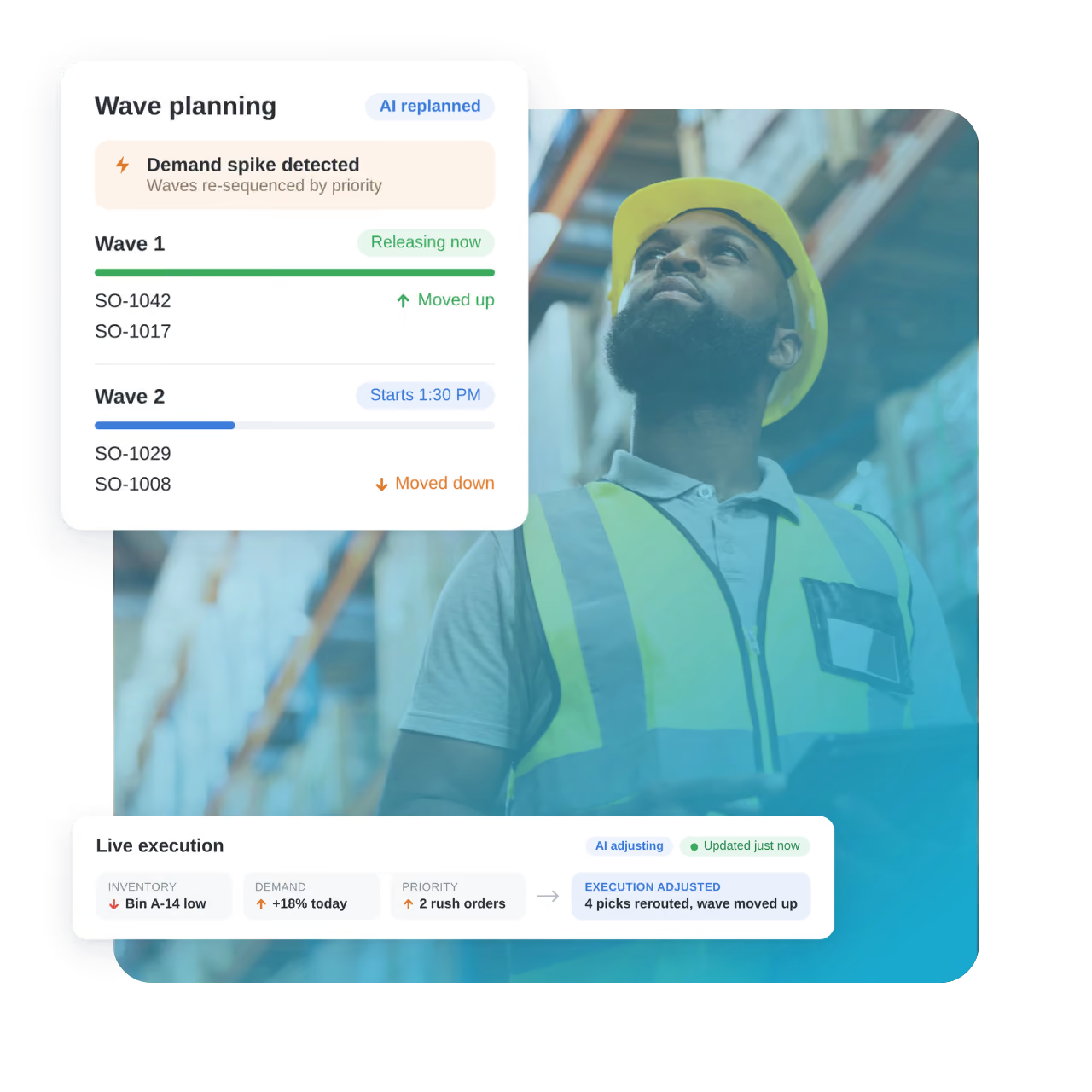
Make Inventory Execution More Dynamic
Move beyond static rules with AI that responds to changing operational conditions. Dynamically plan waves, prioritize orders, or adjust execution as inventory, demand, and priorities change.
Choose the Right Inventory Control Approach
Find the inventory management solution that best matches your business needs.
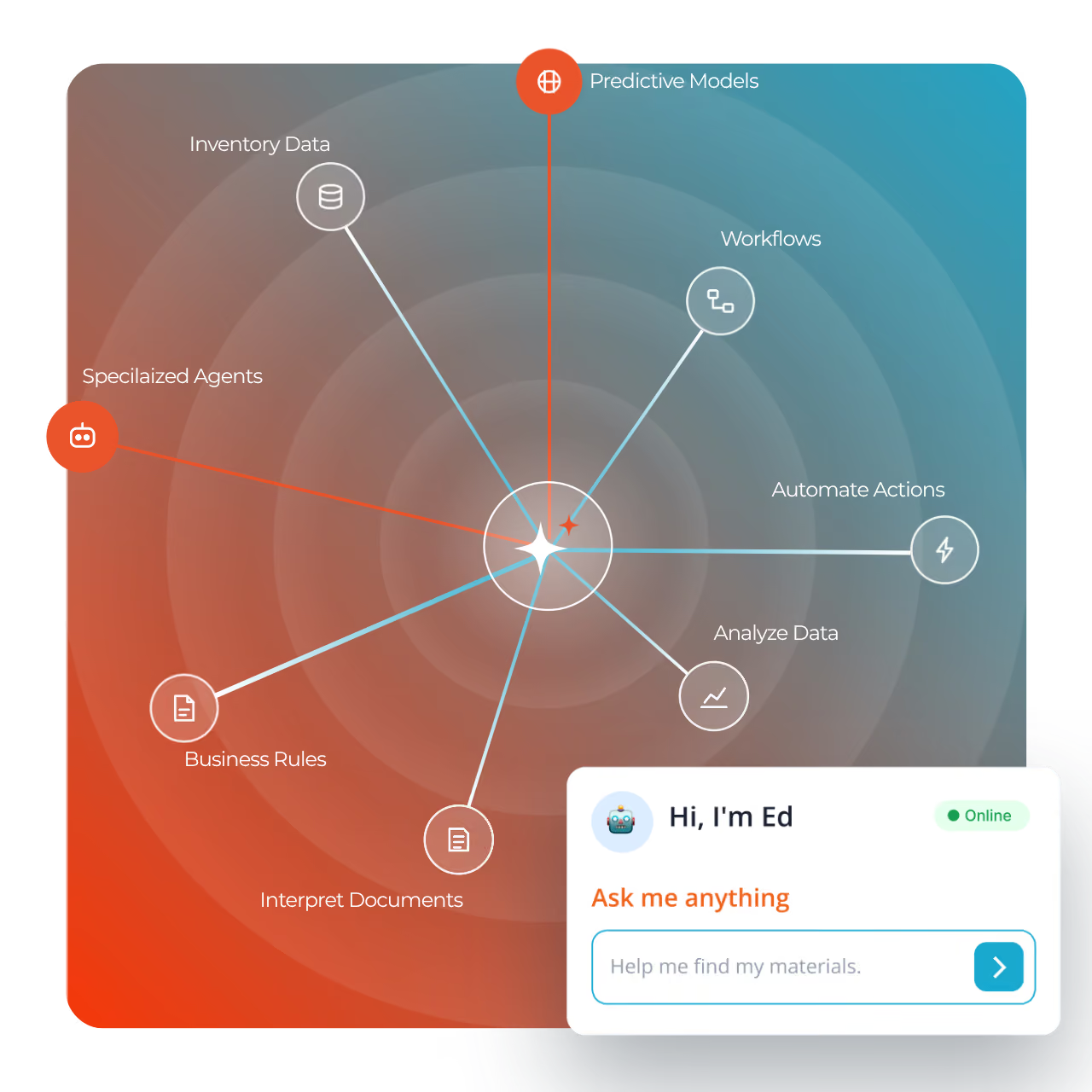
How It Works
Cloud Inventory connects AI models, LLMs, and agents with your inventory data, workflows and business rules, giving them the context to understand how your operation works. Analyze data, train predictive models, interpret documents, deploy specialized agents, and use AI to inform or automate actions—all within the same platform that manages inventory execution.
FAQs
Get answers to common questions about Cloud Inventory's AI offering for inventory management.
What is AI inventory management? And how can AI be used for inventory execution?
AI inventory management applies artificial intelligence to inventory data and processes to uncover insights, predict outcomes, and automate work or decisions. AI can improve inventory execution in a variety of ways such as wave planning, order prioritization, stockout prediction, document processing, or quality inspections.
How does Cloud Inventory keep its AI inventory management secure and governed?
Cloud Inventory applies AI within the platform’s existing security and governance framework, so AI respects established user permissions, data access and business rules. This helps organizations adopt AI while maintaining control over what data AI can access and how it can act within inventory operations
Does Cloud Inventory support Model Context Protocol (MCP) and what does it enable?
Yes. Cloud Inventory supports MCP, allowing AI agents and models to securely connect with Cloud Inventory tools and operational data. This gives other AI tools you trust the business context needed to understand inventory operations, access relevant information, and take governed action.
What are AI agents for inventory management? Does Cloud Inventory provide any out of the box?
AI agents use inventory data and operational context to work toward defined goals—analyzing conditions, making decisions and taking action as operations change. Cloud Inventory provides purpose-built agents for common inventory processes, while also giving customers the tools to build and orchestrate their own.
Can I build my own AI agents, models, and orchestrations with Cloud Inventory?
Yes. Cloud Inventory provides the no-code tools to build AI agents, train models, and orchestrate AI inventory workflows directly within the platform. Everything you build exists alongside Cloud Inventory solutions and your business data.
Why does it matter that AI is native to Cloud Inventory products?
Because AI is built directly into Cloud Inventory, it operates with the business context, inventory data, security permissions and automation controls already established in the platform. That means AI can understand your operations and take appropriate action without the complexity of bolting on and governing a separate AI solution.
Can users interact conversationally with Cloud Inventory's AI?
Yes. Users can interact with Cloud Inventory’s AI using natural language, much like a conversation with ChatGPT or Claude. Ask questions about your inventory and operations to analyze data, uncover insights and get answers without building reports or writing complex queries.