When Every Extra Step Adds Up
Every workaround feels harmless on its own. String enough of them together, and you get slower fulfillment, frustrated teams, and margins that quietly erode. These inefficiencies typically come down to manual work standing in for systems that should move on their own.
Your ERP and your paper spreadsheet each need someone to walk over and update them by hand.
Someone ends up keying the same transaction into several different systems every single week, then reconciling the differences when the numbers don't match, all before they've done a single minute of the job they were actually hired for.
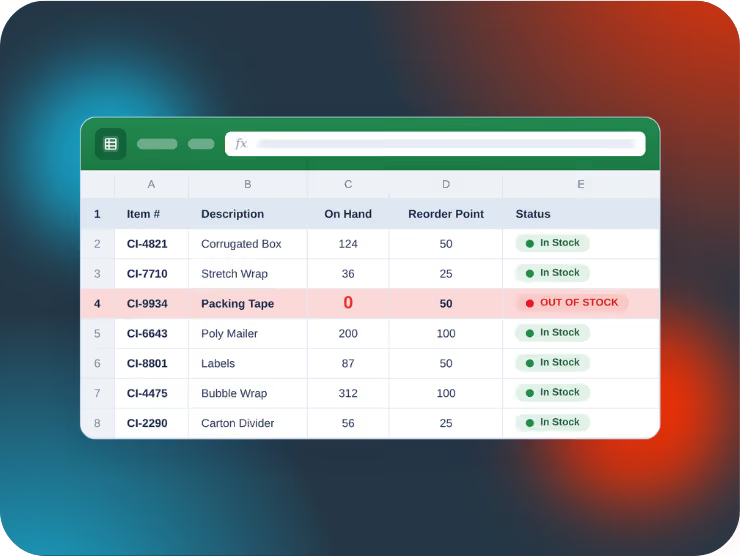
Work happens on the warehouse floor long before anyone sits down to log it.
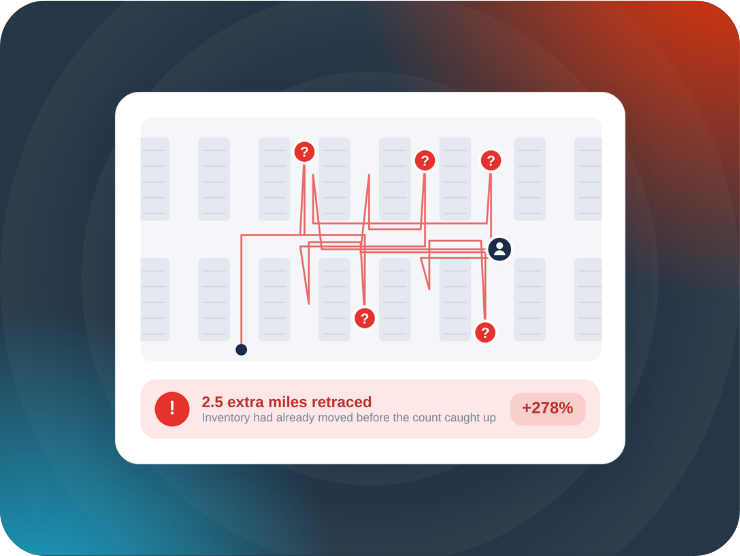
Because of that gap, pickers walk aisles hunting for inventory that's already moved, wait on confirmation that never quite catches up, and retrace routes they could have skipped if the count had been right the first time.
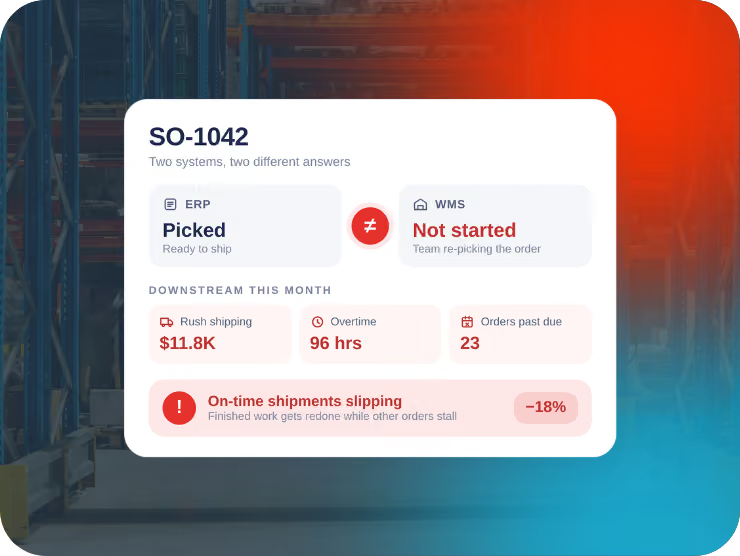
Two systems showing two different truths isn't a minor glitch. It's exactly why teams redo finished work while other orders stall before they ever get to ship.
The result shows up downstream, in rush shipping, unplanned overtime, and orders that quietly slip past their due dates.
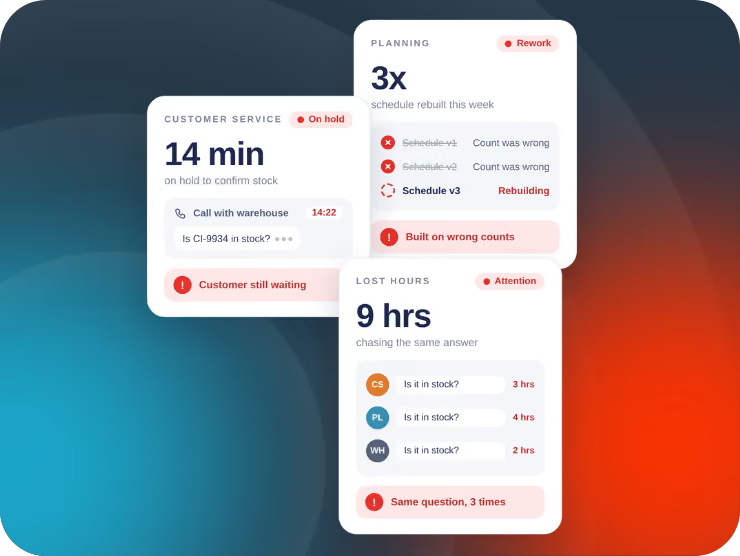
The ripple effects often reach well beyond the warehouse floor and into nearby departments.
Customer service reps wait on hold with the warehouse to confirm what's actually in stock, planners redo schedules built on counts that turn out wrong, and everyone loses hours chasing down the same answer more than once.
Get More Done With the Team You Have
Discover solutions designed to reduce operational headaches.
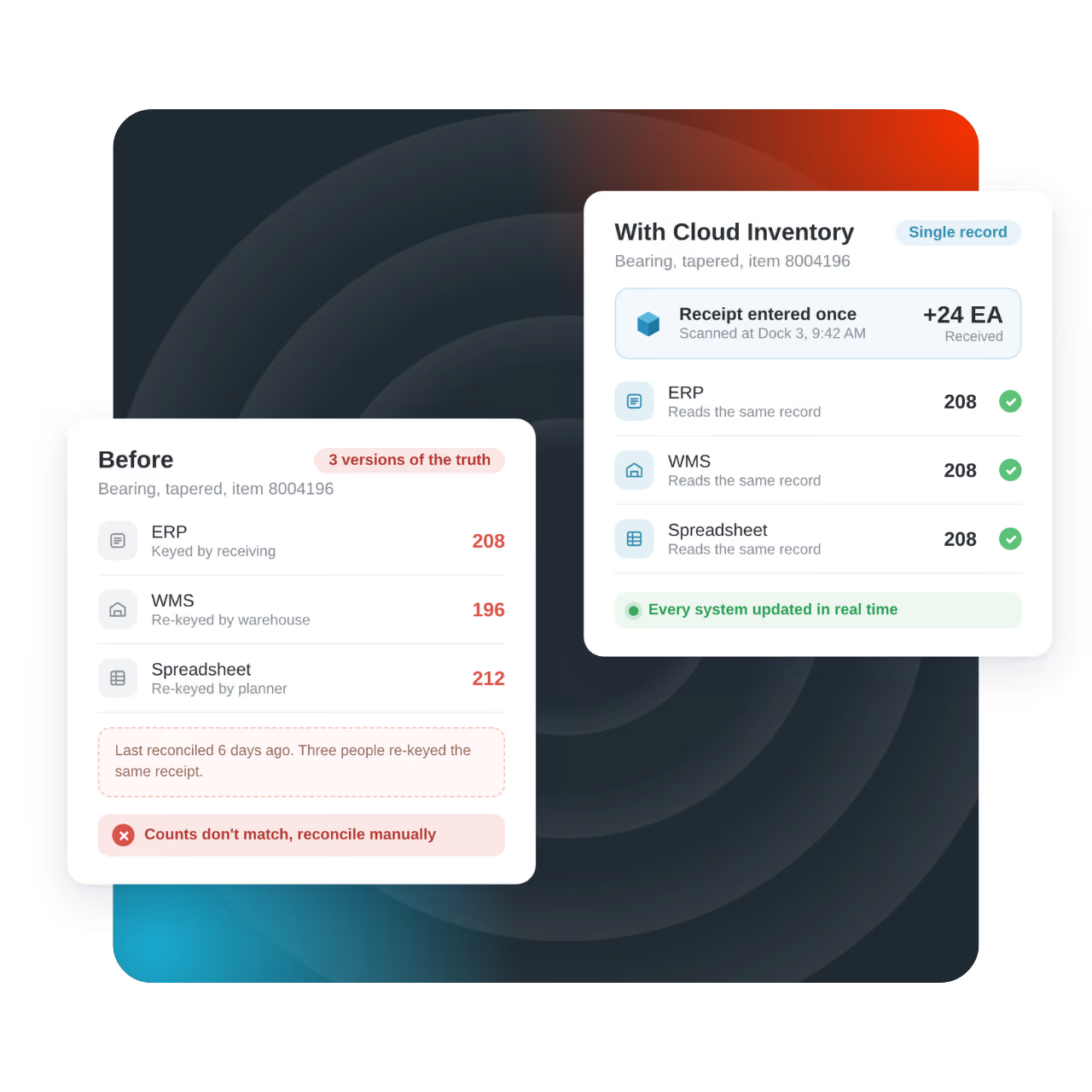
Cut Duplicate Data Entry
One accurate record means no re-keying data across systems and no reconciling three versions of the truth. With Cloud Inventory, work gets entered once, done once, and is always up to date.
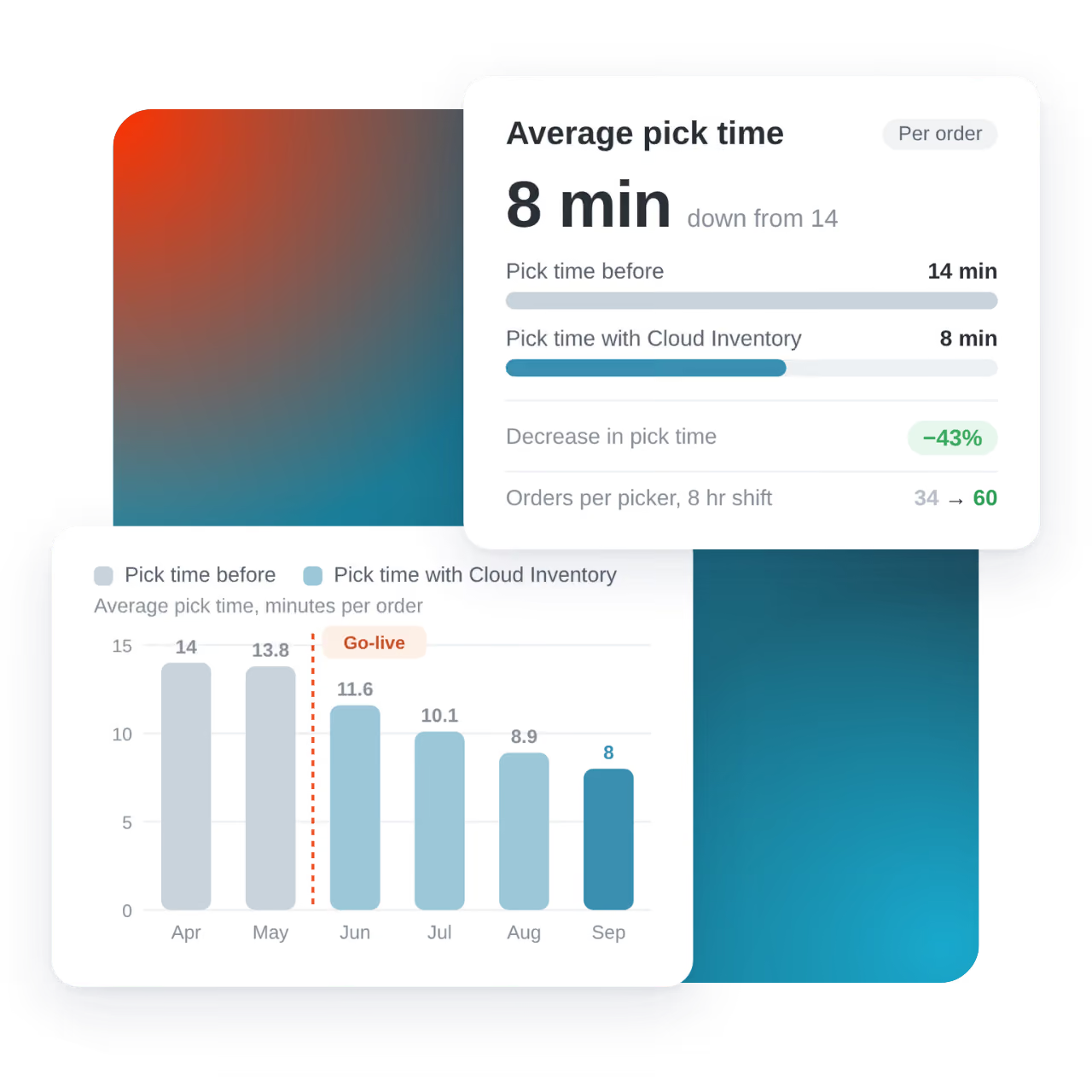
Streamline Key Workflows
Speed up order fulfillment with automated prioritizations, wave plans, and other standard inbound and outbound workflows. With Cloud Inventory, teams know what inventory is available, what condition it is in, and do away with manual data entry.
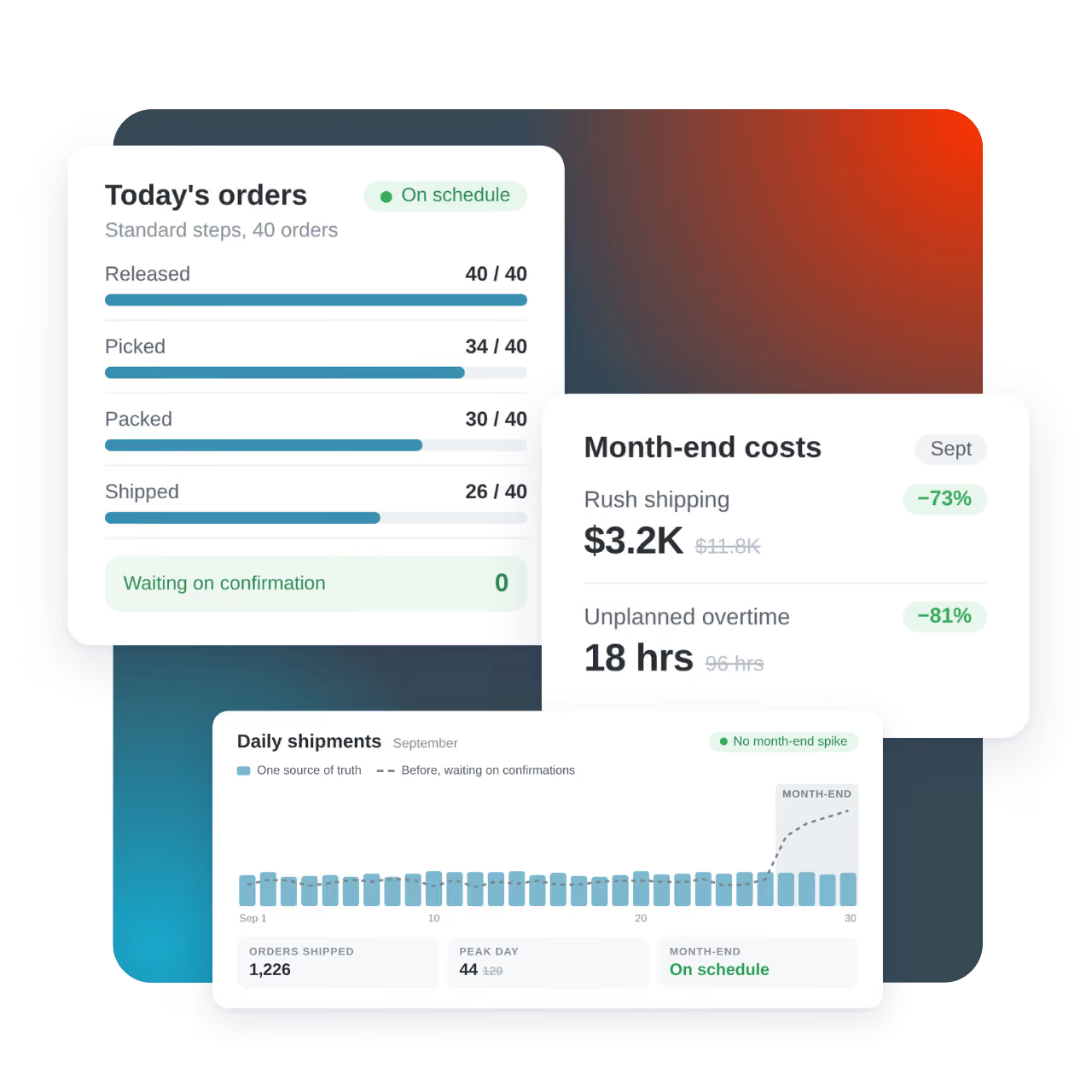
Eliminate the End-of-Month Rush
When your business works off of one source of truth, teams stop waiting on confirmations and stop scrambling at month-end. Orders move through standard steps on schedule, cutting the rush shipping and unplanned overtime that pile up when work stalls.
ROI You Can Measure in Months
99.5%
Inventory Accuracy
30%
Decrease in Labor Costs
40%
Increase in Pick Rate
20%
Reduction in Dock-to-Stock Time
Choose the Right Inventory Control Approach
Three ways to upgrade your inventory operations, each designed to boost accuracy, speed, and visibility.
Plug Straight Into Your Current Setup
Keep data flowing between your ERP and every inventory activity for an up-to-date snapshot of your operation.









We've seen substantial time savings since implementing Cloud Inventory. Searches that previously would've taken hours now yield results in only 10 minutes.

With Cloud Inventory, we can process and send out invoices within a day of work orders being performed.

When we're ready to ship, we hit one button in Cloud Inventory, and it picks, packs, and ships all of our products.



FAQs
Get answers to common questions about how Cloud Inventory promotes operational efficiency.
How does a connected tech stack lower inventory costs?
Syncing technology systems ensures 100% data accuracy from purchasing to fulfillment, reducing reconciliation work and preventing costly data-entry errors.
How does Cloud Inventory replace manual processes?
Cloud Inventory automates manual work by turning it into standardized, repeatable steps: guided workflows for inbound receiving, outbound shipping, cycle counting, inventory transfers, and wave planning. Instead of teams having to decide on the fly how to receive a shipment, count a bin, or move transfer stock, the system directs each step, in the same sequence, every time.
Does Cloud Inventory eliminate the need for workers to do overtime?
Cloud Inventory won't eliminate every overtime shift, but it removes the main driver behind it: work redone because of bad data. With standardized inbound, outbound, and cycle counting processes, orders move through correctly the first time, so teams spend less time on rush shipping, last-minute corrections, and the overtime hours needed to catch up before a shift ends.
How does inventory visibility lead to better worker productivity?
When workers can instantly see what's available and where it sits, they stop walking the floor to check bins in person or waiting on someone else to confirm a count. They head straight to the right location, pick the right item the first time, and move on to the next task, turning fewer wasted trips and less guesswork into more completed orders across every shift.
Who benefits from operational efficiency improvements? Is it just warehouse managers?
Efficiency improvements benefit anyone whose decisions depend on accurate inventory data: warehouse managers, field service teams, shop floor supervisors, and finance and operations leaders who need to trust the numbers they're planning against.
Other Common Inventory
Pain Points We Solve
Inventory challenges look different across every operation. Explore how Cloud Inventory helps solve common barriers to visibility, control, and efficiency—from the warehouse to the field.
Inventory Control
Your ERP plans the work, but execution happens on the floor. Close the gap with real-time, mobile inventory control.
Warehouse Management
Warehouse complexity is growing, but a full WMS may be overkill. Gain the control you need without the overhaul.
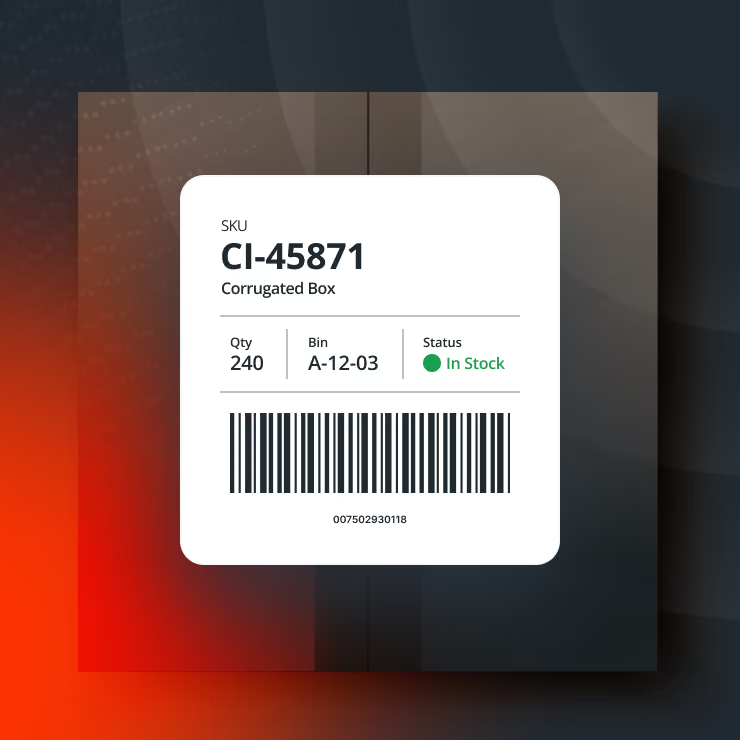
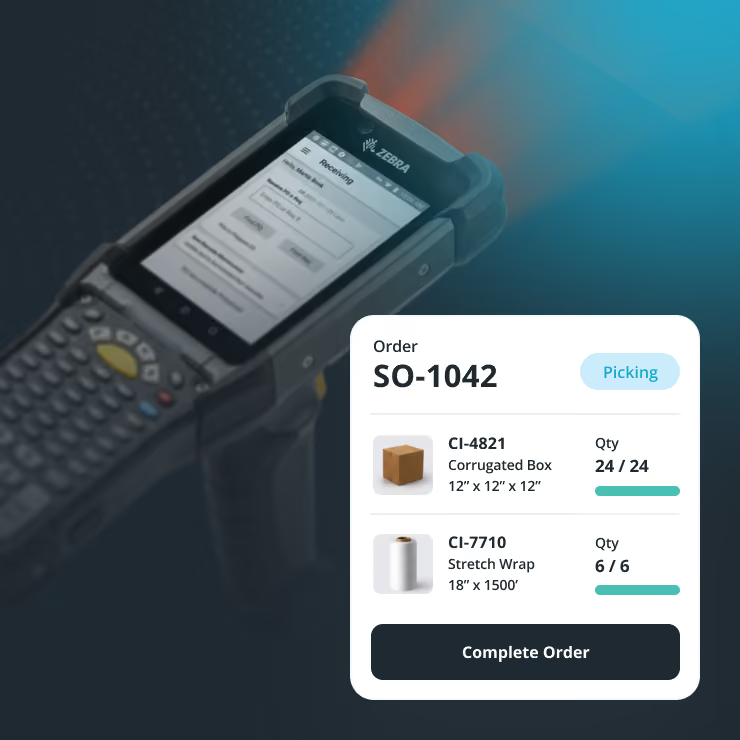
Mobile Data Capture
Still relying on paper and manual entry? Capture inventory movements accurately with mobile scanning.
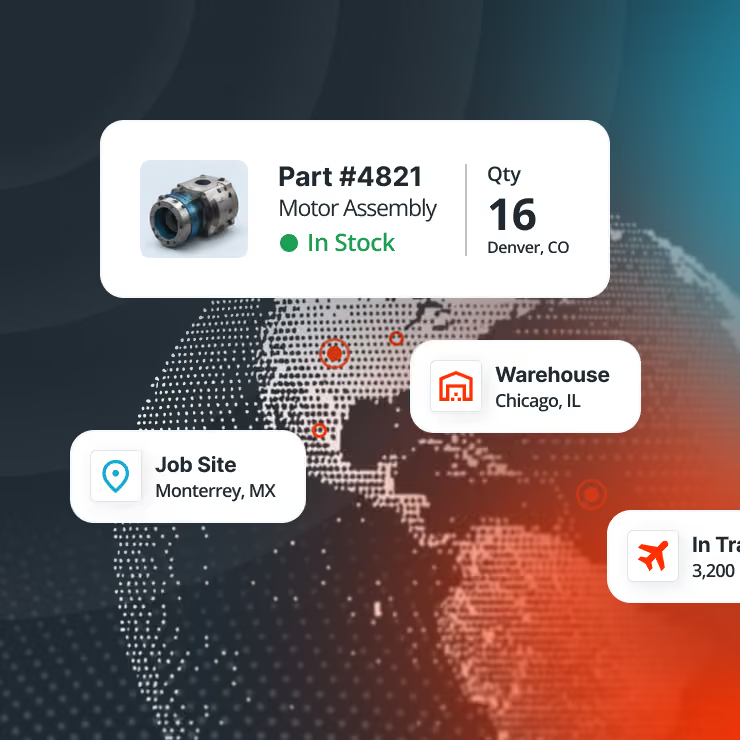
Inventory in the Field
When inventory leaves the warehouse, visibility disappears. Regain control across trucks, sites, and the field.
Practical AI Adoption
Introduce AI that actually makes an impact. Focus on proven use cases that can help you improve control and deliver significant ROI.

Customization & Tech Debt
Custom code solves today's problem but creates tomorrow's tech debt. Adapt without the maintenance burden.

Manage Manufacturing Materials
Lost visibility on the shop floor can lead to shortages and excess stock. Track materials as they're consumed.